
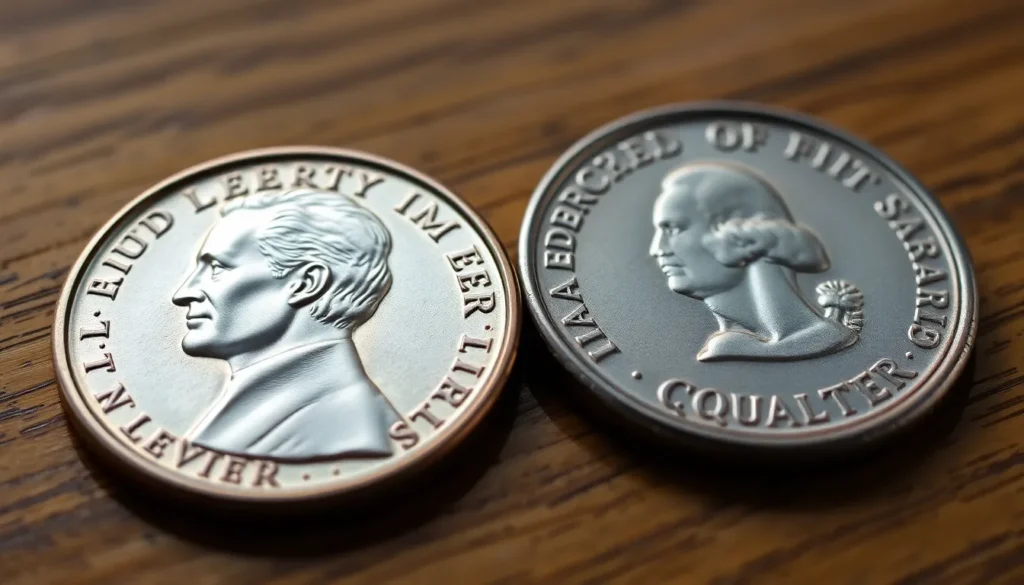
In a world where coins often get lost in the couch cushions, some modern coins are quietly raking in big bucks. Who knew that shiny quarters and funky nickels could turn into mini treasure chests? While most people are busy tossing their spare change into jars, savvy collectors are on the hunt for coins that could be worth a small fortune.
Overview of Modern Coins
Modern coins often surprise collectors and investors with their hidden values. Significant appreciation occurs for coins produced in the last few decades, particularly those with unique features. Various factors influence their worth, including rarity, minting errors, and historical significance.
A 1982-D Lincoln penny made from copper can fetch up to $1,700 if in excellent condition. Certain commemorative quarters, like the 2000 Delaware quarter with the “spitting horse” error, attract attention and can be worth hundreds. Numismatic enthusiasts actively seek these coins due to their potential appreciation.
Silver and gold coins released in the 21st century also hold considerable value. The 2006 American Silver Eagle and the 2014-W $100 gold coin, for example, appeal to investors looking for precious metal investments.
Collectible coins often undergo a grading process. Coins rated higher on the 1 to 70 scale command higher prices. For instance, a 1999 Susan B. Anthony dollar in MS-68 grade may sell for $1,700, demonstrating how quality affects market value.
Market trends indicate that modern coins can continue appreciating over time. Keeping an eye on developing trends and expert insights helps collectors identify high-potential coins. Many enthusiasts expand their collections with patience and knowledge, continually seeking rarities and limited editions.
Factors That Influence Coin Value
Several key factors significantly impact the value of modern coins. Rarity and demand play crucial roles, as unique coins often attract collectors who eagerly seek them out.
Rarity and Demand
Rarity directly affects a coin’s market value. Coins in limited supply or those with low mintage numbers appeal strongly to collectors. Demand complements rarity; if many collectors desire a specific coin, its value increases. For instance, the 1999-W Susan B. Anthony dollar only had a mintage of 750,000, making it a coveted piece among collectors. Limited editions or error coins also garner higher prices, owing to their unique characteristics. Higher demand boosts the chance of appreciation, with auctions reflecting this trend, as buyers compete for rare modern coins.
Condition and Grading
The condition of a coin plays a vital role in determining its value. Coin grading assesses quality based on clarity, wear, and overall appearance. Coins graded higher, such as MS-67 or MS-68, command significantly higher prices than those in lower grades. Each increase in grade can mean hundreds or thousands of dollars in value. Collectors favor coins in pristine condition, as they ensure the preservation of details and appeal. Coins exhibiting minting errors, like double strikes or off-centers, typically gain higher grades and, consequently, elevated valuations. Grading standards adhere to strict guidelines, providing buyers with confidence in their purchases.
Notable Modern Coins Worth Money
Several modern coins have captured the attention of collectors and investors alike due to their significant value. Each type of coin has unique characteristics contributing to its worth.
Silver Eagles
Silver Eagles stand out as one of the most sought-after modern coins. Since their introduction in 1986, these coins have maintained popularity among collectors due to their purity. The 1996 Silver Eagle coin is particularly valuable, often selling for over $2,000. Other years, especially those with lower mintages, can also command high prices. Investors appreciate these coins not only for their collectible value but also as a hedge against inflation.
State Quarters
State Quarters released by the U.S. Mint from 1999 to 2008 gained immense popularity. Not all quarters are equal; specific varieties hold greater worth. The 2004 Wisconsin quarter, for instance, features a rare “extra leaf” variety, fetching hundreds of dollars. Collectors often search for quarters with unique features, low mintages, or errors. States like Delaware and South Carolina also showcase quarters with notable value due to their rarity.
Error Coins
Error coins frequently demand high prices in the numismatic market. Coins with misprints, double strikes, or incorrect designs catch the eyes of collectors. A famous example includes the 2000 Washington quarter with a “drooping” flag, which can reach up to $1,500. Errors may arise during the minting process, resulting in unique characteristics. Collectors often seek these rare finds for their distinct appeal, making error coins highly valuable.
How to Evaluate Your Coins
Evaluating coins effectively involves understanding authenticity and market value. Many collectors overlook these essential aspects, leading to missed opportunities.
Recognizing Authenticity
Authentic coins possess distinguishing features that confirm their legitimacy. Inspect metallic composition; many modern coins contain specific alloys. Examine the mint marks; they indicate production locations, helping to verify rarity. Use magnifying tools to scrutinize details like edges and surfaces, as imperfections might highlight counterfeits. Trustworthy resources or services exist for authentication; consider seeking professional assistance when in doubt. Increased knowledge about design elements enhances the ability to recognize authenticity.
Researching Market Value
Market value varies significantly based on demand and rarity. Start by consulting reputable sources like numismatic guides and auction results. Explore online platforms where collectors buy and sell coins; these reflect current market trends. Engage with coin clubs or online forums to gain insights from fellow enthusiasts. Note that prices fluctuate; keeping track of these adjustments aids in valuing a collection. When assessing specific coins, factor in condition and recent sales of similar items to establish accurate worth.
Tips for Selling Modern Coins
When selling modern coins, collectors should first assess the coin’s condition. Grading plays a crucial role, and an expert’s opinion can provide insight into its market value. Researching recent sales of similar coins helps understand pricing trends.
Understanding selling platforms is essential. Online marketplaces like eBay and dedicated coin auction sites can offer broader exposure. Local coin shops may provide immediate transactions but can present lower offers.
Select a reliable grading service if professional grading is necessary. Reputable organizations, such as the Professional Coin Grading Service (PCGS) or Numismatic Guaranty Corporation (NGC), can boost a coin’s marketability. Higher-grade coins can command significantly higher prices.
Networking within coin clubs creates valuable selling opportunities. Engaging with other collectors and investors can lead to sales indirectly. Attending coin shows also allows for direct buyer-witness interactions, which may facilitate favorable deals.
Maintaining detailed records of provenance increases credibility. Document the coin’s history and authenticity to attract serious buyers. Clear documentation reassures purchasers about the investment they’re making.
Timing can influence sales strategy. Selling during peak demand periods, such as coin shows or collector events, often yields better prices. Monitoring market trends helps identify the right moments for optimal earnings.
Packaging coins securely contributes to maintaining their condition. Using protective holders or capsules safeguards against scratches or damage during the sales process. Presenting coins well can enhance perceived value and appeal.
Modern coins hold unexpected value that can surprise many collectors and casual observers alike. With unique features and historical significance, some coins can appreciate significantly over time. Understanding the factors that influence a coin’s worth is essential for anyone looking to delve into this fascinating hobby.
Collectors who stay informed about market trends and grading standards will find themselves better equipped to identify high-potential coins. The thrill of discovering a hidden gem in spare change can lead to rewarding financial opportunities. By taking the time to research and evaluate their collections, individuals can navigate the world of modern coins and potentially unlock substantial value.


