
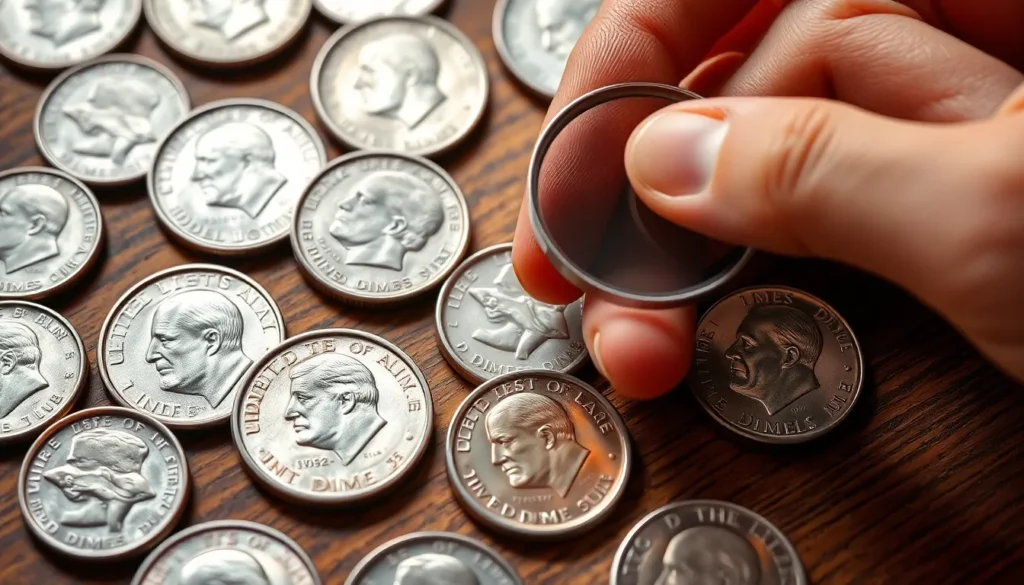
When it comes to coins, dimes often get a bad rap. They’re the forgotten change at the bottom of your pocket, overshadowed by their flashier cousins like quarters and dollar bills. But hold onto your wallets! Some modern dimes are worth more than just ten cents, and they might just be hiding in plain sight.
Understanding Modern Dimes
Modern dimes hold a surprising potential for value beyond their face amount. Collectors often seek specific coins due to their unique characteristics and historical significance.
Definition of Modern Dimes
Modern dimes refer to coins minted from 1965 onward. These coins contain a copper-nickel alloy, giving them a distinct look and feel. While the common design displays President Franklin D. Roosevelt, some special editions and errors warrant attention. Coins produced for circulation remain widely available, but certain versions, like those from limited mintage runs, can command higher prices in the collectible market.
Historical Context
Dimes have a rich history that dates back to the early 1790s. The Coinage Act of 1792 established the dime as a part of the U.S. currency system. Initial coins featured different designs and compositions, with silver dimes remaining in circulation until 1964. Changes in production arose during the 1960s due to rising silver prices. Consequently, the transition to copper-nickel blends in 1965 significantly altered dime production and its impact on collectors. Understanding this historical evolution helps highlight the value fluctuations seen in modern dimes.
Key Factors That Determine Value
Understanding the key factors that contribute to the value of modern dimes enhances the ability to identify valuable coins in circulation.
Mint Marks and Their Importance
Mint marks play a crucial role in determining the value of dimes. Each mint, such as Philadelphia, Denver, and San Francisco, produces coins that may vary in rarity. For instance, the “S” mint mark often denotes coins from the San Francisco Mint, which can be more sought after. Collectors specifically look for dimes with unique mint marks, as they often indicate lower production numbers. High demand for these coins often drives up prices significantly in the collector market. Identifying the correct mint mark on a dime can mean the difference between worth mere cents and hundreds of dollars.
Condition and Grading
Condition and grading determine a dime’s collectible value substantially. Coins graded higher, such as those in mint state, retain original luster and detail. Grading standards, set by organizations like the Professional Coin Grading Service, classify the condition on a scale from one to seventy. Coins in exceptional condition, such as uncirculated or nearly uncirculated, often command higher prices. Damage, scratching, or discoloration reduces a coin’s value significantly. Therefore, maintaining a dime’s condition enhances its marketability among collectors.
Notable Modern Dimes Worth Money
Certain modern dimes carry significant value beyond their face value. Collectors often seek specific years and mint marks.
1982 Roosevelt Dime
The 1982 Roosevelt Dime, particularly the one minted in Philadelphia without a mint mark, stands out in the collectible market. It became noteworthy due to its low mintage of only 3.5 million coins. Uncirculated examples of this dime command high prices, with some selling for over $10. Mint condition can significantly increase its value. Condition-based grading determines pricing, making it essential for collectors.
1996-W Roosevelt Dime
The 1996-W Roosevelt Dime, produced as part of the 50 State Quarters program, exemplifies rarity and demand. Minted only for collectors, around 1.4 million of these coins exist. They’re distinguished by a “W” mint mark from the West Point Mint, which collectors prize. Prices can exceed $20 when in outstanding condition. High grades attribute to their desirability, leading to competitive bidding in auctions.
2009 Dime
The 2009 Dime also holds attention in the modern coin market. This year marked the 200th anniversary of the birth of President Franklin D. Roosevelt, creating special interest. The year saw a limited production of dimes due to economic factors, leading to fewer coins in circulation. Collectors find well-preserved examples, desirable, often selling for $5 or more. Coin grading plays a crucial role in defining market value for these pieces.
Where to Buy and Sell
Finding venues to buy or sell modern dimes proves essential for collectors and enthusiasts. Various options exist, each offering different advantages.
Coin Shops
Local coin shops serve as reliable sources for buying and selling modern dimes. Knowledgeable staff members often provide appraisals, making it easier for collectors to understand a coin’s value. Many shops also purchase coins directly, offering cash or store credit. Engaging with these experts can lead to valuable insights about the market. A well-established shop often attracts both buyers and sellers, fostering a community centered around coin collecting.
Online Marketplaces
Online marketplaces have gained popularity for trading modern dimes. Platforms like eBay and Etsy allow users to list coins for sale or participate in auctions. These websites often feature a wide array of options, catering to diverse budgets and preferences. Sellers can reach a broader audience and potentially fetch higher prices than at local venues. Collector forums and dedicated websites further enhance online trading by facilitating direct sales between enthusiasts.
Modern dimes hold hidden value that many might overlook. With a keen eye for detail and an understanding of mint marks and grading, collectors can uncover treasures in their change. Special editions and error coins can fetch impressive prices, making it worthwhile to examine dimes more closely.
Local coin shops and online marketplaces provide excellent avenues for buying and selling these valuable coins. By engaging with the community and staying informed about market trends, collectors can enhance their collections and potentially profit from their finds. The world of modern dimes is more intriguing than it appears, offering both historical significance and financial opportunity.


