
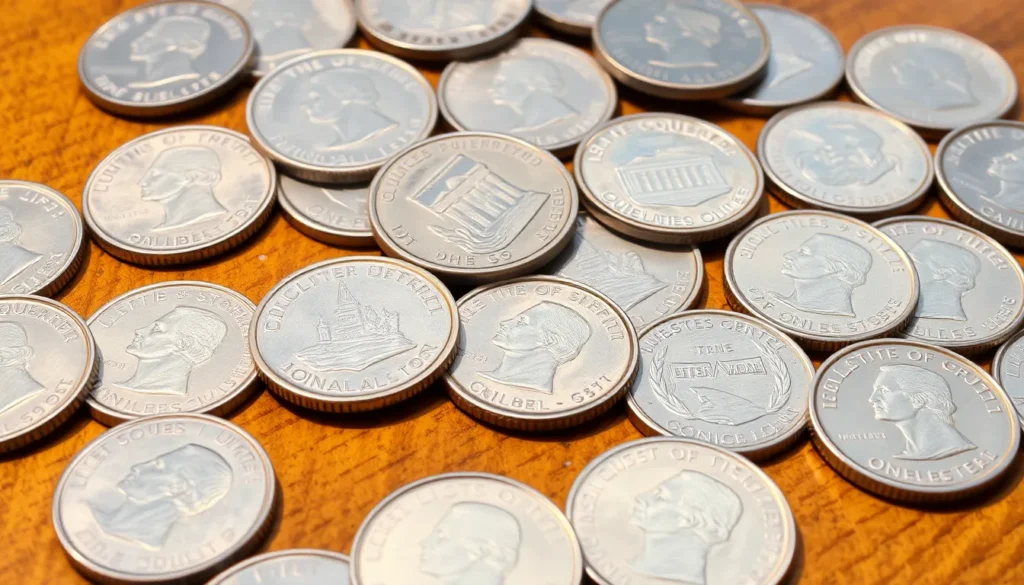
When it comes to modern quarters, most folks think they’re just pocket change. But hold onto your wallets! Some of these shiny discs could be worth way more than their face value. Imagine finding a quarter that’s worth a small fortune instead of just a quick trip to the vending machine.
Overview of Modern Quarters
Modern quarters, minted from 1965 onward, often appear to be standard currency, but some possess unique characteristics that increase their value. Understanding specific types can unveil surprising worth. Proof quarters, for instance, produced for collectors, showcase higher quality strikes, which often commands a premium price above face value.
State quarters minted between 1999 and 2008, part of a popular series, feature unique designs for each state. Certain state quarters, particularly those with low mintage, reach values of several dollars or more. Notably, the 2004-D Wisconsin quarter with an extra leaf is one example, selling for upwards of $100 depending on its condition.
Silver quarters issued in 1932-1964 present another category collectors prize. These quarters contain 90% silver, making them appealing for both their numismatic and melt value. Current silver prices can elevate these quarters’ values significantly, often falling in the range of $5 to $15 or more per coin, depending on their condition.
In addition, errors in the minting process contribute to the appeal of modern quarters. Misprints, double strikes, or incorrect metal compositions can make specific coins highly sought after. For instance, the 1983-P quarter with a missing clad layer may fetch prices in the hundreds.
Collectors often seek specific mint marks, including those from the Philadelphia, Denver, and San Francisco mints. Identifying these mint marks can enhance the potential value of certain quarters. Overall, the nuances in modern quarters present opportunities for collectors and casual skimmers alike.
Factors Affecting Quarter Value
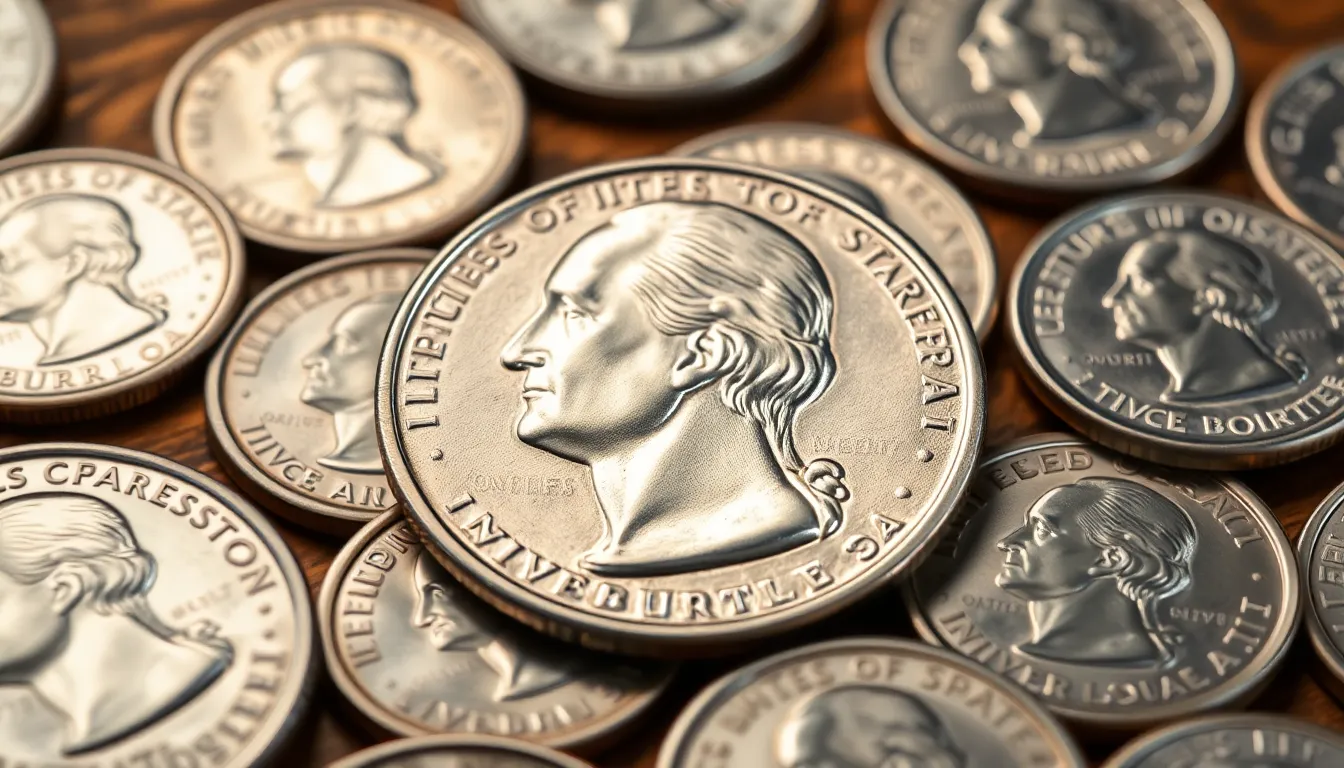
Several elements contribute to the worth of modern quarters. Collectors assess these factors carefully to determine value.
Mint Marks and Rarity
Mint marks indicate where a quarter was produced. Philadelphia, Denver, and San Francisco are the key mints with distinct marks. Quarters from mints with lower production levels tend to be rarer. For example, the 2004-D Wisconsin quarter with an extra leaf has a low mintage, increasing its desirability. High demand for such rare pieces can lead to values surpassing standard quarters by several dollars. The significance of mint marks remains crucial for collectors aiming to build valuable collections.
Condition and Grading
Grade significantly influences a quarter’s value. Coins in excellent condition typically command higher prices. Collectors use a grading scale from poor to mint condition, with higher grades fetching premiums. Scratches, wear, and discoloration can diminish a quarter’s appeal. Collecting quarters in uncirculated or proof condition guarantees better potential in the marketplace. Investing in well-preserved quarters is a strategy employed by many collectors to maximize their returns.
Notable Modern Quarters
Certain modern quarters possess remarkable value, attracting attention from collectors. Understanding these specific types can lead to significant discoveries.
State Quarters
State quarters, minted between 1999 and 2008, offer unique opportunities for collectors. Low mintage examples can prove especially valuable. A standout is the 2004-D Wisconsin quarter featuring an extra leaf, which can fetch several dollars. Other state quarters may hold worth based on demand and condition, driving collectors to search for these more elusive coins. Many collectors prioritize finding quarters from states they favor, enhancing personal connections to their collections. As rarity increases, so does potential value, underscoring the importance of examining individual coins closely.
National Park Quarters
Introduced in 2010, National Park quarters celebrate America’s natural beauty and historical sites. Each coin in this series commemorates a national park or site, making them appealing to collectors and nature enthusiasts alike. Quarters in pristine condition or featuring particular mint marks gain extra attention. Specific issues, such as the 2010-P Grand Canyon quarter, might be more coveted due to limited production or errors. Notably, these coins often evoke sentiments about conservation and history, adding sentimental value. Collectors, therefore, find the National Park quarters not only represent financial investment but also cultural pride.
Collecting Tips for Modern Quarters
Collecting modern quarters requires keen observation and attention to detail. Focus on specific features that can indicate greater value, such as unique mint marks or rare errors. Examine quarters closely for distinct characteristics, including condition and any signs of wear or damage.
Seek out state quarters from the 1999 to 2008 series. Low mintage examples, like the 2004-D Wisconsin quarter with an extra leaf, often attract collectors’ interest. Explore National Park quarters minted since 2010, as some issues may be more valuable due to limited production.
Prioritize quarters in pristine condition. High-grade coins usually fetch higher prices on the market. Use the Sheldon grading scale to assess the quality of a quarter, making it easier to determine its potential value.
Stay informed about recent auction results and market trends. This knowledge can help recognize valuable quarters and enhance collecting strategies. Network with other collectors and join online forums to exchange insights and tips.
Consider acquiring additional resources, such as coin price guides or reference books. Such materials can provide specific valuations and help identify valuable coins. Keep a thorough inventory of collected quarters to track their potential worth over time.
Resources for Valuation
Knowing where to find accurate valuation resources for modern quarters proves essential for collectors. Websites like the Professional Coin Grading Service (PCGS) provide comprehensive price guides tailored to different quarter types. Utilizing resources such as Numismatics and Coin World helps gather information on market trends.
Grading services maintain high credibility, as they offer expert assessments. The official U.S. Mint website also serves as a reliable source for coin specifications, minting details, and recent values. Collectors frequently rely on Red Book and other numismatic publications for insightful data on modern quarters.
Local coin shops can be valuable for obtaining hands-on appraisals. Experienced dealers often provide insights into current market conditions and can assess coins in real time. Online auction sites, such as eBay, exhibit actual sales prices for quarters, offering a practical reference point.
Forums dedicated to coin collecting, like the Coin Community Forum or Reddit’s r/coins, allow collectors to exchange information and experiences. Recommendations from fellow collectors about specific media or valuable finds often emerge in these discussions. Social media platforms also play a role in connecting collectors to valuable resources and up-to-date price information.
Utilizing smartphone apps like Coinoscope can help identify quarters and check their values instantly. Journalism outlets focused on numismatics can provide updates on any news or emerging trends within the coin market. With these resources, anyone interested in modern quarters can make informed decisions about their collections.
Modern quarters can surprise collectors with their hidden value. By examining mint marks and unique characteristics, individuals can uncover coins worth much more than their face value. It’s essential to pay attention to condition and rarity when assessing potential worth.
Collectors should remain vigilant for low mintage state quarters and National Park quarters that may fetch a premium. Additionally, understanding the significance of errors and utilizing reliable valuation resources can enhance one’s collecting experience. With a little knowledge and careful observation, anyone can elevate their coin collection and possibly turn pocket change into a valuable asset.


